
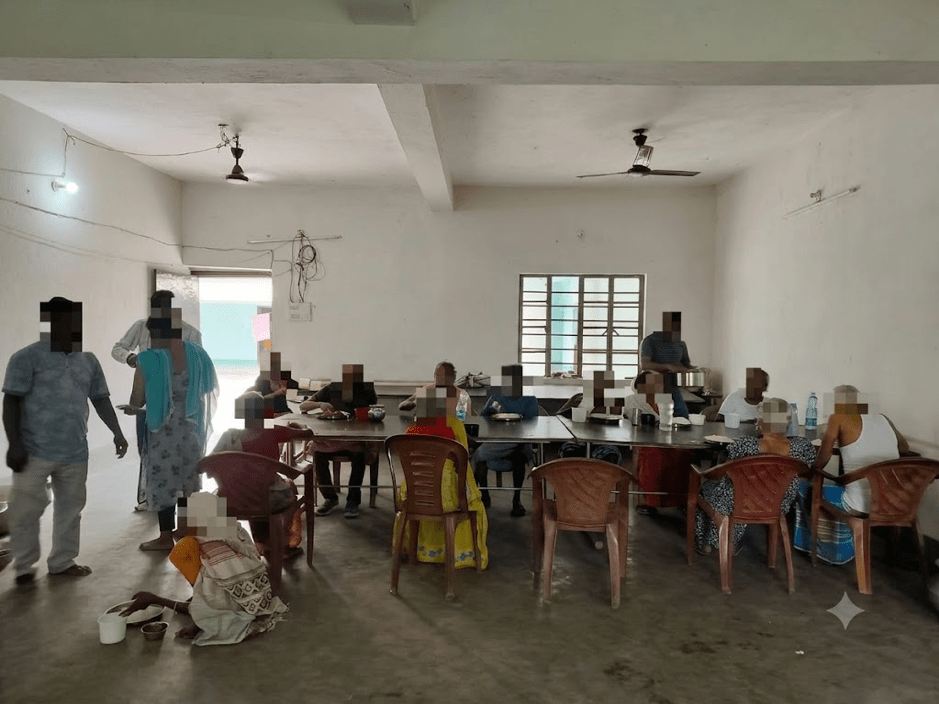
In the recent past, the interconnected themes of loss, decay, expendable lives, and affective politics circumscribing death and parting has nudged me to think, write and sometimes go standstill in a state of processing and becoming….. A formal attempt to conceptualize and navigate the manifolds and multi-layers of this loss began with amassing the narratives of ayahs, paid care workforce in India whose testimonies of keeping together families and ageing selves in dying trajectories is both inspiring and haunting; eventually I grew interested in the discursive practises foisted upon widows to mark their life stage that of social death, displacement and deaths in transition, and now have expanded this horizon to public mobilization in the aftermath of state-complicit deaths, and the complex affect experienced in more-than-human deaths.
Entwining these strands with Kathryn’s reflexive account on death literacy and communication offers a possible framework to approach these messy, unsettled, and often unfathomable conversations with both care and restraint – Sayendri
Introduction
Death, dying and bereavement are universal experiences that will affect all of us. Despite this, research indicates that these conversations still do not take place (Biscuit Tin, 2021; Sue Ryder, 2019), leaving many people unprepared to navigate such experiences.
With a recent study indicating that there are at least 376,000 young adult carers in the UK (16 to 25) (Carers Trust, 2026), this prompted me to consider whether death literacy should be viewed not only as a public health issue but also as an educational and social justice issue. If caring is an essential part of human life, then preparing people to navigate death, dying and bereavement could be seen as an important aspect of education.
Teaching Death Education in Further Education
I recently delivered a teaching session at a local Further Education (FE) college in the UK for an Access to Higher Education (Social Sciences) class. The aim of the session was to explore the taboo surrounding death and the importance of developing death literacy. Death literacy is having the knowledge, skills, and awareness of issues concerning death, dying, end-of-life care, and bereavement, and the ability to put that knowledge into practice (Marie Curie, 2022). Raising death literacy aims to equip people with the skills not only to help themselves but also to support those within the wider community who might be impacted by death and dying (Marie Curie, 2022). Death literacy can be important in implementing compassionate communities throughout the UK, as such, transforming care and bringing care for the dying back into the community.
Pedagogical Approaches to Teaching Sensitive Topics
Teaching sensitive subjects requires careful pedagogical planning. As such, I began the teaching session by establishing a respectful and psychologically safe learning environment in which students felt able to engage with potentially difficult discussions around death, dying and bereavement.
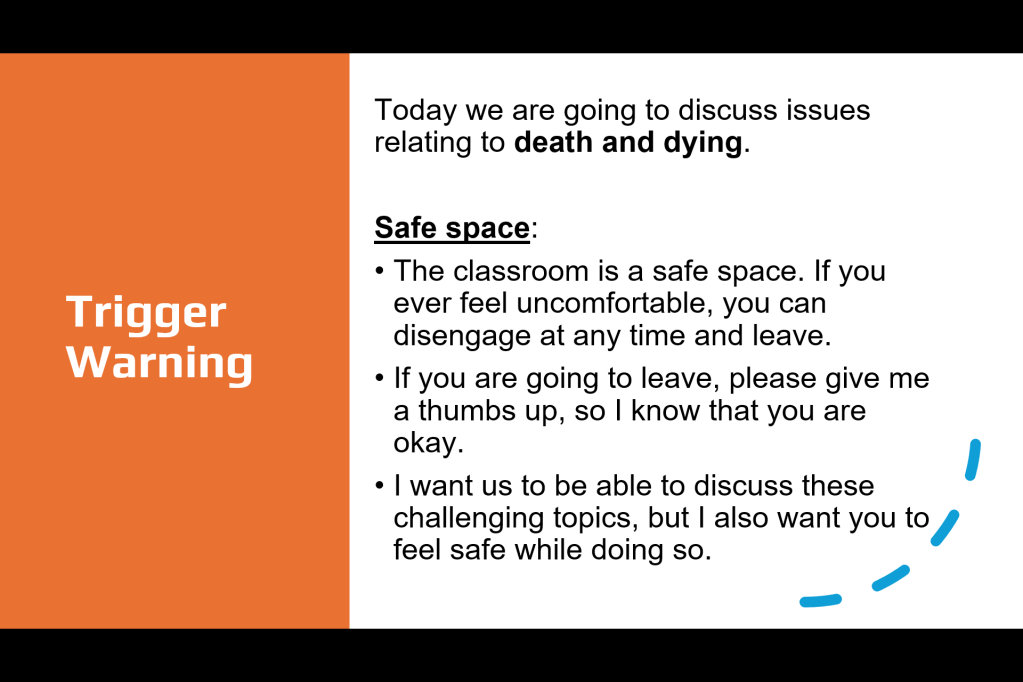
Students were provided with a trigger warning informing them that the lesson would involve discussions around death and dying, thus allowing them to prepare for the potentially triggering content. I reassured students that, while the lesson explored challenging and potentially emotional topics, the classroom is intended to be a safe space where they can express their thoughts, ask questions and engage in discussion without judgement. Students were reminded that everyone has the right to engage with the topic at their own comfort level. To support this environment, I outlined the following expectations:
- If you ever feel uncomfortable, you can disengage at any time and leave.
- If you decide to leave, please give me a thumbs-up signal so that I know you are safe and do not require immediate support.
- Everyone’s views and experiences should be treated with respect and sensitivity.
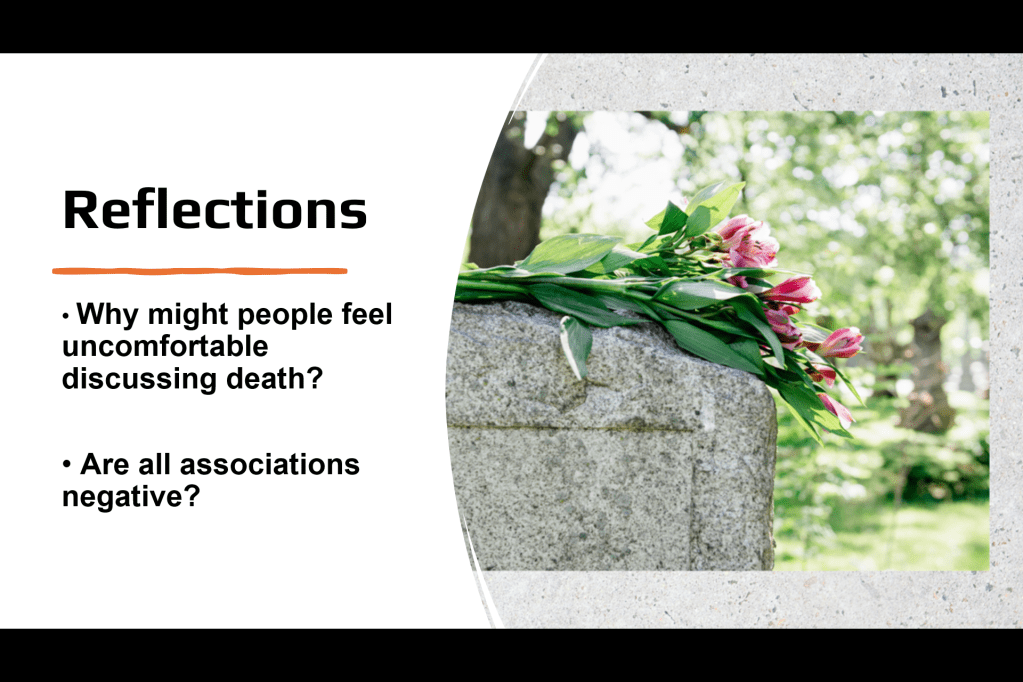
The session adopted an experiential learning approach, encouraging students to reflect critically on their own beliefs and experiences. Reflective questions included:
- Why might people feel uncomfortable discussing death?
- Do you think “taboo” is the best concept to describe modern attitudes?
- How could more openness to death change society?
The literature indicates that experiential learning can promote student engagement and understanding of sensitive issues (Lekes et al., 2022; Pilcher, 2017; Nolan & Roberts, 2023). This approach proved particularly effective, generating thoughtful, honest and respectful discussion throughout the session.
Recognising that students engage with sensitive material in different ways, I also designed an optional class debate. Providing multiple modes of delivery gives learners control over when and how they participate in these difficult discussions (Flintoft & Bollinger, 2016). The debate offered an alternative route into the topic, allowing students who felt less comfortable speaking in whole-class discussions to first develop ideas collaboratively within smaller groups. This is particularly important when teaching death, dying and bereavement, as educators cannot assume prior experiences or emotional readiness among learners.
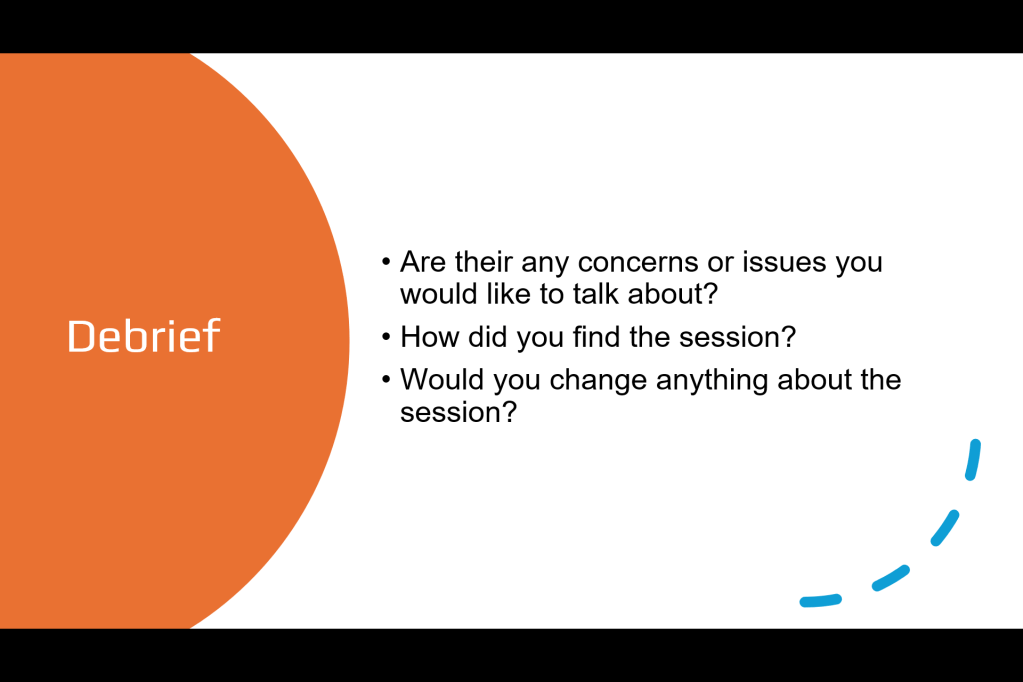
Students were then debriefed at the end of the session to ensure they felt supported and did not leave the classroom feeling distressed or emotionally overwhelmed. This provided students with an opportunity to process the content and create some emotional distance before the end of the lesson.
In addition, anonymous feedback was gathered at the end of the session so that I could evaluate how effectively the sensitive subject matter had been handled. The feedback was overwhelmingly positive, with students describing the session as engaging, important and inspiring.
Developing Care Through Death Education
Death and dying are often hidden from public discussion, despite the fact that most people will, at some point, provide care for a dying relative, support a bereaved friend or experience bereavement themselves. By encouraging students to engage openly with these topics, the session created a safe space for caring conversations that are often absent from formal education. In this sense, death literacy can be understood as a form of care knowledge: knowledge that enables individuals to support themselves and others.
Reflecting on this teaching experience through the lens of care, caring, and care labour raises interesting questions about the role that education can play in preparing people for some of life’s most challenging experiences. Encouraging conversations about death within educational settings may also have effects beyond the classroom. For example, exposing students to materials that encourage conversations about death may help them facilitate conversations with their parents and grandparents about end-of-life issues, such as what matters most to them as they approach death and practical matters including advance care planning and funeral preferences.
While the session focused on increasing knowledge and confidence in discussing death, dying and bereavement, it also indicated how conversations about death are deeply connected to practices of care. For example, during the session, students reflected on how they might initiate conversations with parents or grandparents about their end-of-life wishes, recognising that listening to and respecting those wishes could itself be understood as an act of care.
The discussions that emerged during the session also revealed the emotional labour involved in caring. Students reflected on experiences of grief, concerns about supporting loved ones, and the difficulties of knowing what to say when someone is bereaved. These conversations revealed that care extends beyond practical tasks to include emotional work such as active listening, providing comfort and simply being present for others. However, these skills are rarely recognised or taught explicitly within the education system.
Conclusion
As of September 1st, 2026, death, dying and bereavement are explicitly included within the mandatory curriculum in the UK (The Still Method, 2026). This policy change makes it increasingly important to consider not only what is taught but also how these sensitive topics are taught.
By questioning the taboo surrounding death, educational institutions can help promote more compassionate communities in which these difficult topics are acknowledged rather than hidden (Abel et al., 2016; Kellehear, 2025; St Helena, 2026). Death education therefore has the potential to not only increase death literacy but also promote empathy, reduce anxiety and encourage meaningful conversations.
References
Abel, J., Sallnow, L., Murray, S. & Kerin, M. (2016). Each community is prepared to help: Community development in end of life care – guidance on ambition six. https://www.ncpc.org.uk/sites/default/files/J1448%20ncpc_strand_6_ART_NC.pdf
Biscuit Tin (2021). Death remains one of the last taboos according to research. Biscuit Tin. https://biscuittin.co.uk/news/death-remains-one-of-the-last-taboos-according-to-research/
Carers Trust (2026). About young adult carers. https://carers.org/about-caring/about-young-adult-carers
Flintoft, R., & Bollinger, C. (2016). Beyond Trigger Warnings: Preparing for Engaged Learning within an Ethic of Care. About Campus, 21(3), 24–31. https://doi.org/10.1002/abc.21244
Kellehear, A. (2005). Compassionate Cities (1st ed.). Routledge. https://doi.org/10.4324/9780203019955
Lekes, N., Martin, B. C., Levine, S. L., Koestner, R., & Hart, J. A. (2022). A death and dying class benefits life and living: Evidence from a nonrandomized controlled study. The Journal of Humanistic Psychology, 2216782210790. https://doi.org/10.1177/00221678221079069
Marie Curie. (2022). Creating a death literate society. https://www.mariecurie.org.uk/document/creating-a-death-literate-society-ni-2022
Nolan, H. A., & Roberts, L. (2024). Trigger warnings as tools for learning—theorising an evolving cultural concept. Medical Education, 58(2), 185–195. https://doi.org/10.1111/medu.15172
Pilcher, K. (2017). Politicising the “personal”: the resistant potential of creative pedagogies in teaching and learning “sensitive” issues. Teaching in Higher Education, 22(8), 975–990. https://doi.org/10.1080/13562517.2017.1332030
St Helena. (2026). Compassionate communities. https://sthelena.org.uk/what-we-offer/compassionate-communities
Sue Ryder. (2019). Over two thirds of adults have not written a will, new survey finds. Ehospice. https://ehospice.com/uk_posts/over-two-thirds-of-adults-have-not-written-a-will-new-survey-finds/
The Still Method. (2026). September 2026: The Grief Education Requirement Most Teachers Don’t Know About Yet. https://www.thestillmethod.co.uk/news/september-2026-the-grief-education-requirement-most-teachers-dont-know-about-yet
The Quality Assurance Agency for Higher Education. (2026). Access to Higher Education. https://www.qaa.ac.uk/access-to-he
Biography
Kathryn Radley is a PhD graduate from the University of Huddersfield and has recently completed a Postgraduate Certificate in Education (PGCE) in Lifelong Learning. Her research explores the topic of death communication, focusing on how individuals begin to become open to such conversations. This involves understanding the process behind openness to engaging in death-related conversations and how such discussions arise, persist, and change overtime.
Twitter: @KathrynRadley3

 Sabr: A care collaborative
Leave a comment