
Dear Readers,
This month, we share recent writings by members of The Sabr Collaborative. These works explore the politics of care, bereavement, and social positionality, which shape our collaborative work. We invite you to read, reflect and engage with this critical scholarship.
When the womb turned into a cemetery: An auto-ethnography of silent miscarriage
By Sayendri Panchadhyayi
Sayendri’s research lies at the intersections of critical gerontology, medical anthropology, the sociology of care, life course, and death and bereavement. She presented her recent work at the 2026 FHASS Health Hub Symposium. In this ethnographic self-reflexive paper, she contextualizes the deeply personal experience of a silent miscarriage. She examines the politics of mourning reproductive loss by delving into themes of grief, bereavement, and how this loss affects the body and interpersonal relationships.
“What happens when you have struggled to conceive and finally as your womb prepares to nestle a growing baby, you are hit by the disclosure of seizure of heartbeat and collapsing remains of a deceased foetus? Such a condition could risk the mother’s safety but is it easy to part with the final remains of an extension of yourself? What happens when a body growing inside another body is now dismembered and disintegrated? How do we express grief for a deceased foetus or end-of-life for an externalised extended self of an unborn child? How does this unexpected loss translate for the self, body & intimate ties? What kind of linguistic tools do we employ to respond to a miscarriage? How do we choose to disclose about this medical stage and how do we hold back to our informal networks? How do we process bereavement within and to the people around?” (Panchadhyayi, 2026)
Reflecting on the intimate bodily experiences, she engages with some of these poignant questions around silent miscarriage and critically examines how medicalization of the body, coupled with the social stigma, cultural silence and a lack of public discourse around reproductive loss, can marginalize maternal grief.
Relational Work in the Shadow of Caste: The Case of Women Domestic Workers in India
By Aiman Nida
Aiman’s research focuses on women domestic workers, delving into themes of precarity, social positionality, and inequality. One of her articles was recently published in the Business and Society journal. Drawing on her extensive fieldwork and in-depth interviews with women domestic workers in Lucknow, she examines the role of caste in shaping the care economy and the relational work that domestic workers undertake to navigate caste-based oppression. She also critically examines how such relational work strategies simultaneously negotiate, reproduce, and maintain caste hierarchies. By theorizing relational ambivalence, she problematizes the romanticized view of workers resistance and resilience, and offers a dialectical view of the strategies adopted by the women domestic workers in navigating structural inequalities.
By Shaima
Shaima, whose work critically examines the political economy of care, has recently reviewed the book ‘The Backstage of the Care Economy: Transnational Perspective on the Commercialization of Care, ” by Helma Lutz, which argues that the backstage of the care economy reveals how transnational care work depends on invisible care labour, family separation, and unequal social reproduction across borders. In her review, Shaima emphasizes how care migration is not just an economic issue but a gendered and political process shaped by the political economy of care. The core thesis of Lutz’s book is that the current understanding of care work is incomplete if it remains confined to the immediate site of care provision – what Lutz terms as ‘frontstage’, due to its sole focus on the situations in the private households of care recipients. Instead, she invokes the idea of ‘backstage’ here to highlight the migrant care worker’s family life and home community. This approach draws the reader’s attention to the social and societal context of care faced by family members of care migrants left behind in their hometowns. This exploration of frontstage and backstage elements in care provision offers a multifaceted understanding of the impact of care migration and commercialization, driven by global capitalism. Such forms of work exploit care migrants and contribute to the fragmentation of families within the reshaped care economies” (Chatheri, 2026).
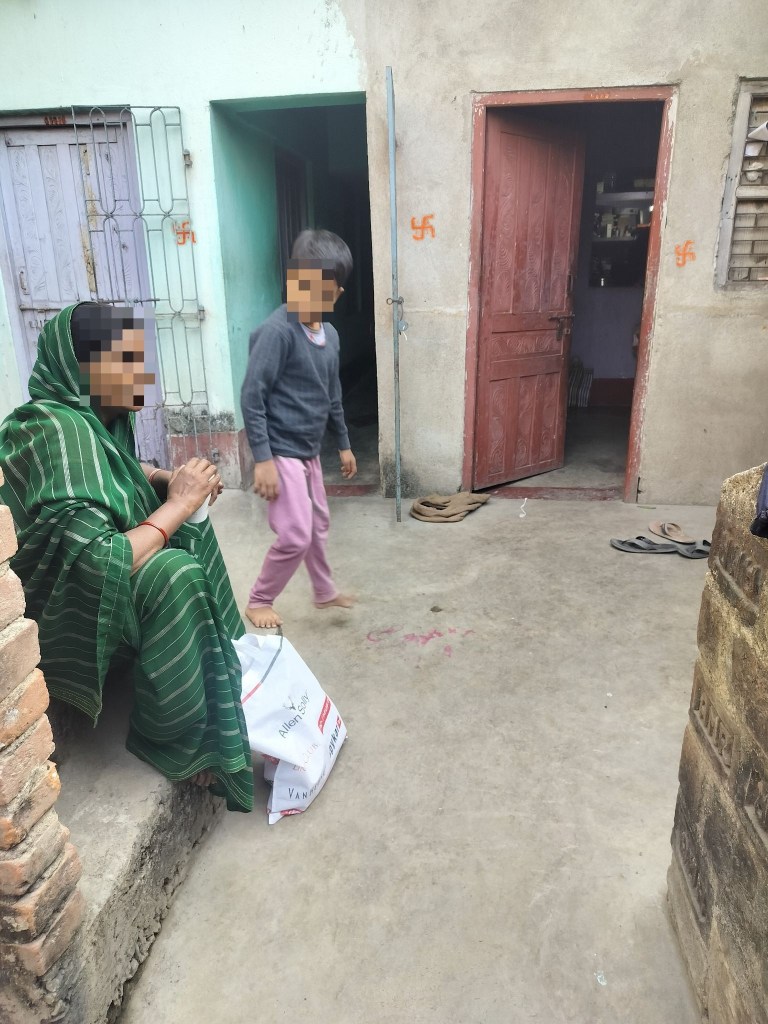
An ASHA worker in Jharkhand distributing medicines
References:
Chatheri, S. (2026). The backstage of the care economy and the transnational crisis of social reproduction [Book review]. Ephemera: Theory & Politics in Organization, https://ephemerajournal.org/contribution/backstage-care-economy-and-transnational-crisis-social-reproduction
Nida, A. (2026). Relational Work in the Shadow of Caste: The Case of Women Domestic Workers in India. Business & Society.
Panchadhyayi, S. (2026). When the womb turned into a cemetery: An auto-ethnography of silent miscarriage. FHASS Health Hub Symposium, 2026. https://wp.lancs.ac.uk/fhasshealthhub/fhass-health-hub-symposium-2026/


 Sabr: A care collaborative
Leave a comment