

Staying with our focus on mental health and well-being, Shaima and Devi from the Sabr Collaborative joined B. Harigovind for a conversation on loneliness and social isolation among emerging adults1 in Kerala (late teens to mid-twenties). B. Harigovind is a public health professional with a Master’s in Public Health and a B.Tech in Civil Engineering. He spoke to us about his research, conducted as part of his postgraduate program, on loneliness and social isolation, and how they influence health and well-being.
The WHO Commission on Social Isolation describes loneliness and social isolation as a public health challenge, affecting nearly one in six people globally (2014–2023) and causing about 871000 deaths annually (2014–2019).
Social connection is essential for the health, strength, and resilience of individuals and societies… Make no mistake – connection is not just a nice idea. It strengthens communities, fosters cooperation, and creates opportunities.
The WHO report notes that social disconnection affects people across age groups. At Sabr, we have looked at friendships among later-life widows2. We have also looked at how communities forge solidarities to address social isolation among chronically and terminally ill people3, 4. However, isolation among emerging adults came as a surprise, particularly in these hyper-connected social media worlds.

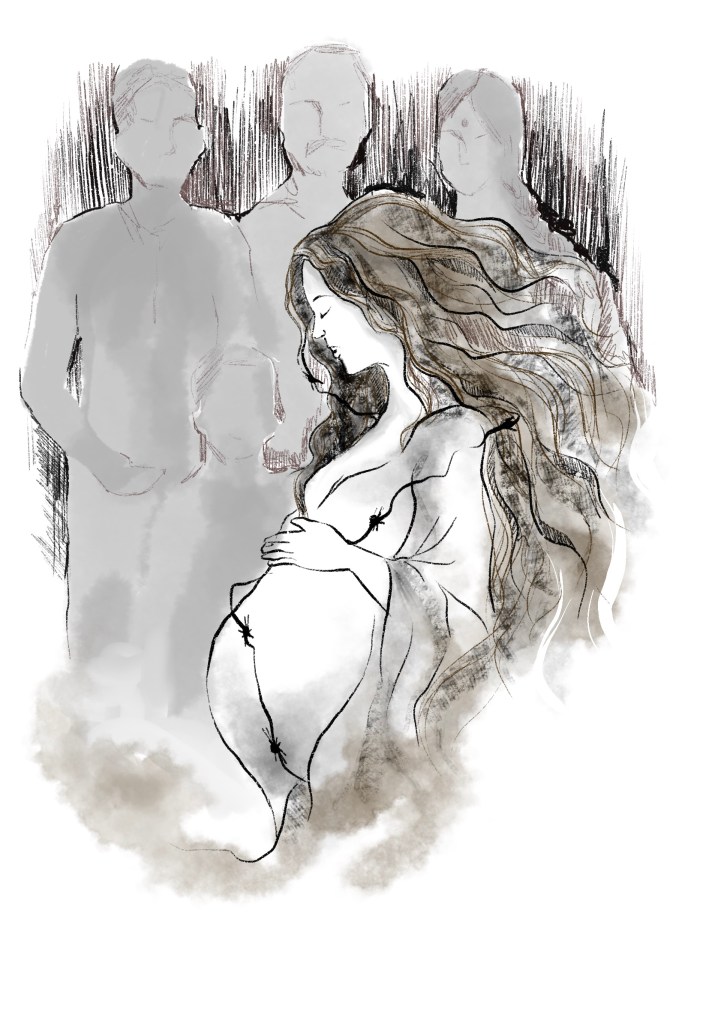
In our conversation with Hari, we discussed Kerala’s shifting demography, healthcare advances, rising incidences of suicides and substance abuse5, social isolation of young mothers, the use of AI chatbots to combat loneliness, in hyper-connected social media worlds… Do social media connections ruin us? Do they save us (sometimes)? Hari shared his experiments with methodology, working with photovoice and framing his own research through images. We explored the responsibilities and limits of public health systems, as well as the possibilities in collectives, music, photography, and films.
Do check out the YouTube Playlist on loneliness that Hari has been curating and generously shares with the Sabr community, with the invitation to add to it.
Hari also lists the following books that engage with loneliness:
- Colorless Tsukuru Tazaki and His Years of Pilgrimage, Haruki Murakami: about loneliness caused by best friends leaving abruptly.
- The Wind-Up Bird Chronicle, Haruki Murakami: what a man goes through after his wife goes missing.
- Aadujeevitham (The Goat Life), Benyamin: a man who goes to the Middle East in search of jobs is kept captive and isolated as a slave.
- Mathilukal (Walls), Vaikom Muhammad Basheer: Loneliness inside a prison, the longing for intimacy.
- Into the Wild, Jon Krakauer: solo hitch-hiking, finding happiness in nature, and towards the end realization that “happiness is real only when shared”.
- In., Will Mcphail: A graphic novel on finding meaningful human connections and what it does to people.
- The Namesake, Jhumpa Lahiri: Loneliness that stems from immigrating to another country.
- Friends, Lovers, and the Big Terrible Thing, Mathew Perry: Lonely in spite of having it all.
- A Man Called Ove, Fredrik Backman: Wanting to be alone but ending up helping a lot of others.
Write to us with your responses to this conversation on loneliness and social isolation.
References
- Arnett, J. J. (2007). Emerging adulthood: What is it, and what is it good for?. Child development perspectives, 1(2), 68-73.
- Panchadhyayi, S. (2021). Gender, widowhood and female solidarity: A study on female friendships of later-life widows. Research on Ageing and Social Policy, 9(1), 26-50. https://doi.org/10.17583/rasp.2020.5053
- Vijay, D., & Kulkarni, M. (2012). Frame changes in social movements: A case study. Public Management Review, 14(6), 747-770.
- Vijay, D., Monin, P., & Kulkarni, M. (2023). Strangers at the bedside: Solidarity-making to address institutionalized infrastructural inequalities. Organization Studies, 44(8), 1281-1308.
- Joseph, J., Hari Sankar, D., & Nambiar, D. (2021). The burden of mental health illnesses in Kerala: a secondary analysis of reported data from 2002 to 2018. BMC Public Health, 21(1), 2264.

 Sabr: A care collaborative
Leave a comment