
–Safareena writes for Sabr on “A Mother’s Journey through Care, Burnout, and Disability Advocacy”
Motherhood changed the course of my life in ways I could never have imagined. My journey began in my early twenties with the birth of my first child—a child who would later be diagnosed with profound cerebral palsy. What followed was a life of care, learning, resilience, and advocacy. It has been a path filled with pain and strength in equal measure, revealing not only the depth of a mother’s care but also the systemic barriers that families like mine continue to face every single day.
My first child had significant developmental delays—he missed every milestone, from holding his head up to sitting or speaking. Eventually, the doctors diagnosed him with profound cerebral palsy–impairment in mobility, vision , speech and intellectual function. I wasn’t ready to accept the reality—he was my firstborn. It was emotionally draining and extremely challenging.
I was young and full of dreams. Time does not function the same way for everyone. My days quickly became filled with hospital visits, therapies, and constant medical care. His epilepsy was not under control with medication, so he stayed in the hospital many times. It took almost two years to control his epilepsy. He has never had a single day in his life without medication. He depends on others for his daily routines. As his primary caregiver, my world revolved around him.
The personal challenges were overwhelming—chronic back pain, headaches, disrupted sleep, uncertainty, and the loss of my social life. Slowly, without even realizing it, I slipped into caregiver burnout. At first, I thought my exhaustion was just “motherhood.” But over time, I felt emotionally drained, guilty, and cut off from the outside world. I carried a constant sense of worry about my son’s future and my own. Some days, I felt like I was just moving through life on autopilot—too tired to acknowledge my feelings. Much later, I understood what caregiver burnout really was.
What made it harder was the systemic challenges that families like mine face every day. In initially, the absence of an early intervention centre made his care especially difficult. At a stage when therapy and structured support could have improved his development, we had no guidance or institutional help. We figured out rehabilitation on our own, often missing crucial opportunities.
Later, while living abroad for ten years, my son received systematic rehabilitation and treatment. But his residence permit was denied because there was no provision for expatriate persons with disabilities to obtain independent permanent residence after the age of sixteen.
After returning home, the barriers continued. He is wheelchair-bound, yet most public spaces—including government offices—remain inaccessible. Something as basic as applying for a disability certificate or a government ID became a struggle. Biometric verification was nearly impossible. For years, my son was excluded from family medical insurance, and private insurers refused coverage for children with disabilities.
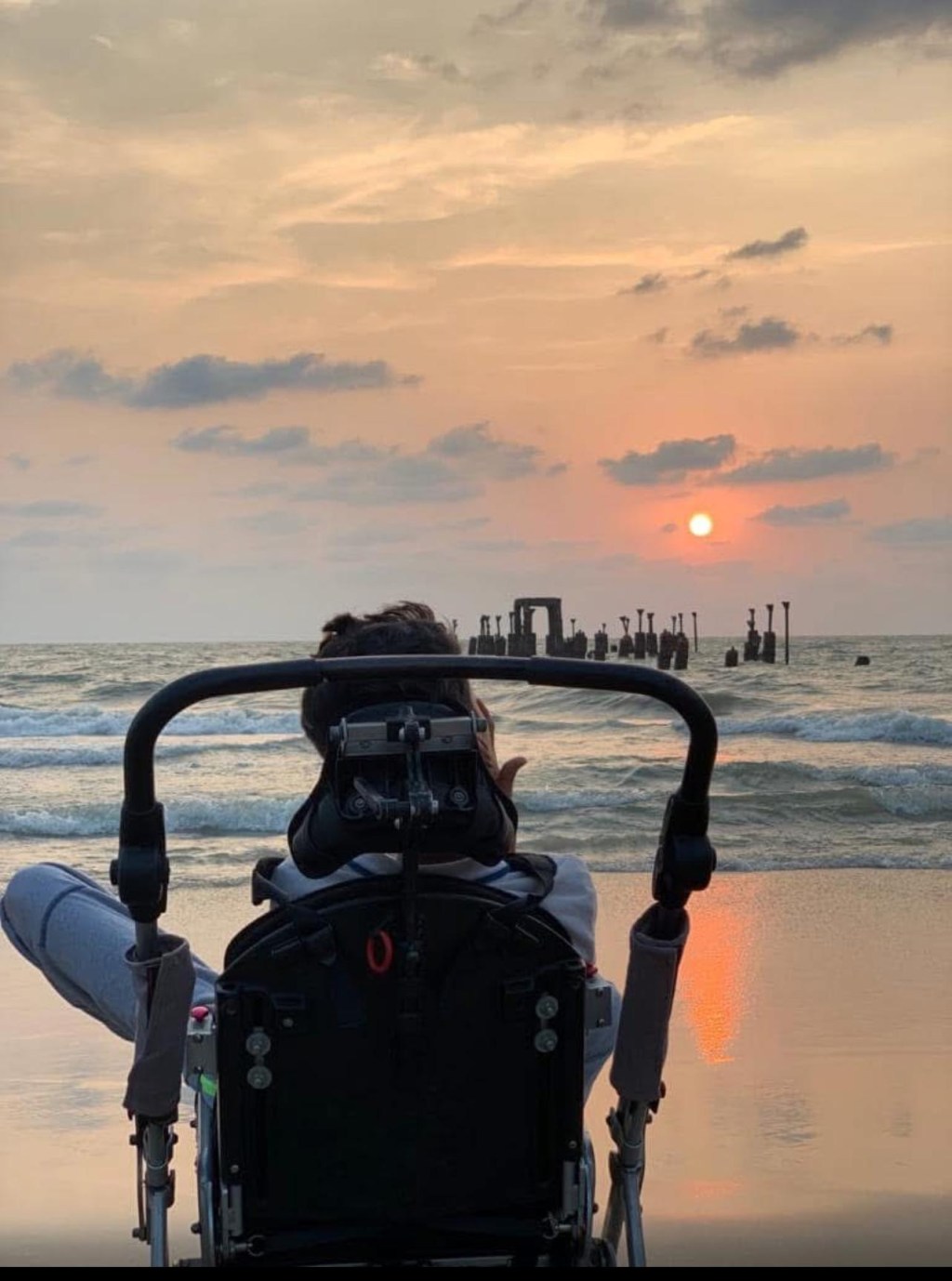
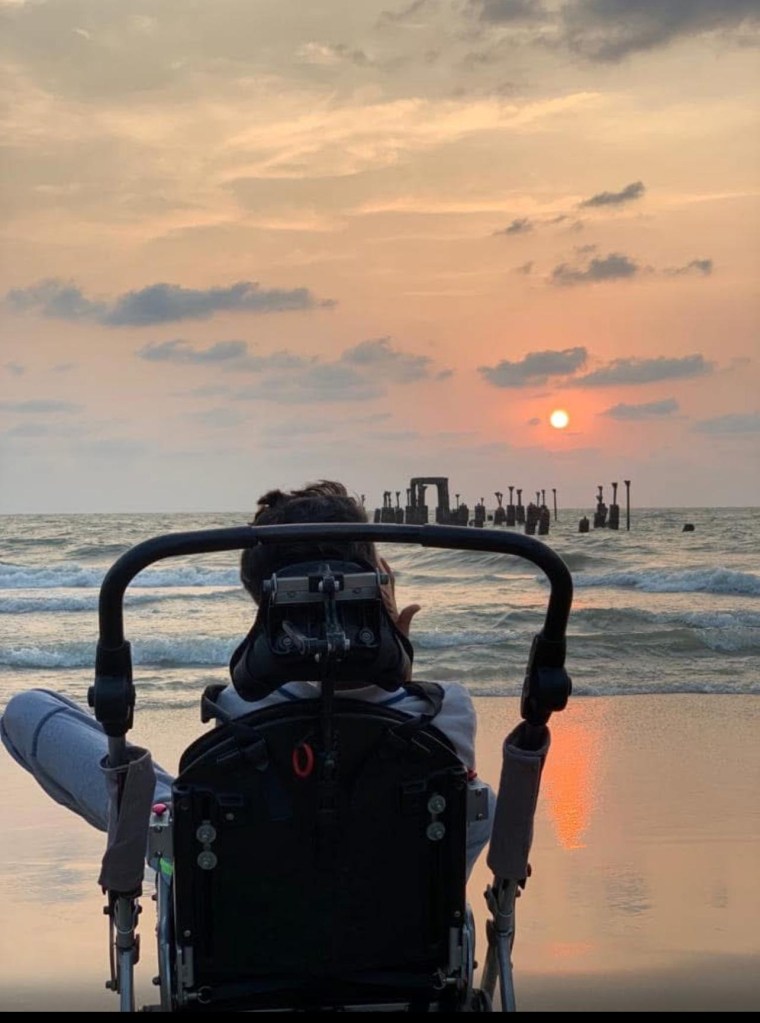
My son has a vibrant personality. He enjoys travel, music, and food. He loves visiting beaches, though every trip is a challenge because of the lack of accessibility. Still, those moments of joy—his smile when he hears his favourite song or tastes food he loves—remind me that life is more than just struggles and hospital visits.
When my second child was born, parenting both children brought new challenges. My time, energy, and emotions had to be divided, and I often wondered if I was giving enough to either of them. Yet, with strong support from my family, friends, and mentor, I slowly found ways to cope. I started volunteering with Compassionate Kozhikode, supporting the help desk for parents of differently-abled children. Later, I also began volunteering with the Institute of Palliative Medicine (IPM). There, I participated in palliative care community volunteer training and provided psychosocial support to patients and their families. Volunteering at IPM changed my perception of life and gave me the chance to reflect deeply on my experiences. It brought a meaningful change in my life. Eventually, I returned to academia, completed a fellowship in palliative care, and pursued a Master’s in Public Health.
Looking back over the past nineteen years, I see my life as one shaped by both pain and strength. Raising a child with profound cerebral palsy has been deeply challenging. But , it has opened my eyes to the institutional barriers that intensify the struggles of families like mine—barriers such as the lack of early intervention centres, inaccessible infrastructure, exclusion from basic social protections like health insurance, complex procedures for obtaining ID cards, and the invisibility of caregiver burnout.
For those of us who live at the shoreline
standing upon the constant edges of decision
crucial and alone
for those of us who cannot indulge
the passing dreams of choice
who love in doorways coming and going
in the hours between dawns
looking inward and outward
at once before and after
seeking a now that can breed
futures
like bread in our children’s mouths
so their dreams will not reflect
the death of ours;
…For all of us
this instant and this triumph
We were never meant to survive.
… So it is better to speak
remembering
we were never meant to survive.
—Audre Lorde
Disability justice demands a radically different imagination of time, care, labor, rest, dreams, futures. For families like ours, what is needed most is systemic equity —– not just policies that exist on paper, but systems that ensure inclusion, accessibility, and dignity for every person with a disability and their caregivers. Accessibility, social protections, dignified care procedures, and disability-friendly systems are not privileges – they are fundamental needs and interdependences .We cannot dismantle systemic barriers towards disability justice within the dominant frameworks around us today.
How may we imagine disability justice beyond survival? How do we shift beyond the guilt and exhaustion in disability worlds and re-build with compassion, autonomy, dignity, and hope? How do you imagine integrating disability justice in your everyday living?
Collective liberation for all our body minds comes; with our collective liberation and care work, it comes. Crip-centric liberated zones and all their glorious, accessible gifts come. Growth and learning in slowness, in sustainability comes, and we get there with our collective love and labor. – Shayda Kafai
Safareena Farhath is an independent researcher and volunteer at Institute of Palliative Medicine, Kozhikode. she is a mother of two, and her eldest son is differently abled. Her areas of interest include disability rights, palliative care, gender and social inclusion.
References
Kafai, Shayda. (2021). Crip kinship: The disability justice and art activism of Sins Invalid. Arsenal Pulp Press.
Lorde,Audre (1978). A litany for survival. https://www.poetryfoundation.org/poems/147275/a-litany-for-survival

 Sabr: A care collaborative
Leave a comment