
Here is an excerpt from Shirin Rai’s new book “Depletion: The Human Costs of Caring.” We haven’t been able to put down the book.
Below is an excerpt that we thought belonged for Sabr readers:
“Care is a species activity that includes everything that we do to maintain, continue, and repair our ‘world’ so that we can live in it as well as possible,” write Fisher and Tronto (1990, 19)… Care is a capacious concept. Care is an immediately understood term from our everyday interactions and empathies, in part because care work emphasizes the care of persons, which takes place in households and communities in all societies; it is as Laugier (2020) argues, entangled in the ordinary… Care is cognitive, affective and embodied (Gilligan, 1982; Hamington, 2004). Care has been defined as “a life affiriming action and an important part of human relationships which does not necessarily represent an unwanted burden” (Dowling, 2021, 20). But the etymology of the word points to exactly such a burden – the Latin root of “care” is the word caru, meaning sorrow, grief and anxiety; as Dowling points out, “one only need think of the image evoked by the term ‘carefree’ being without a worry in the world.” The link between depletion and care here is obvious, but overlooked. (pages 7-8).
Rai draws attention to depletion as the social costs of caring.
A caution here is that Shirin Rai’s book mobilizes social reproduction, as a structural approach to understanding the capitalist system, and care while intertwined and overlapping is not the core analytic.
Below is art work by N. Vijay Mohan, reflecting this etymology of care that encapsulates sorrow, grief, anxiety.
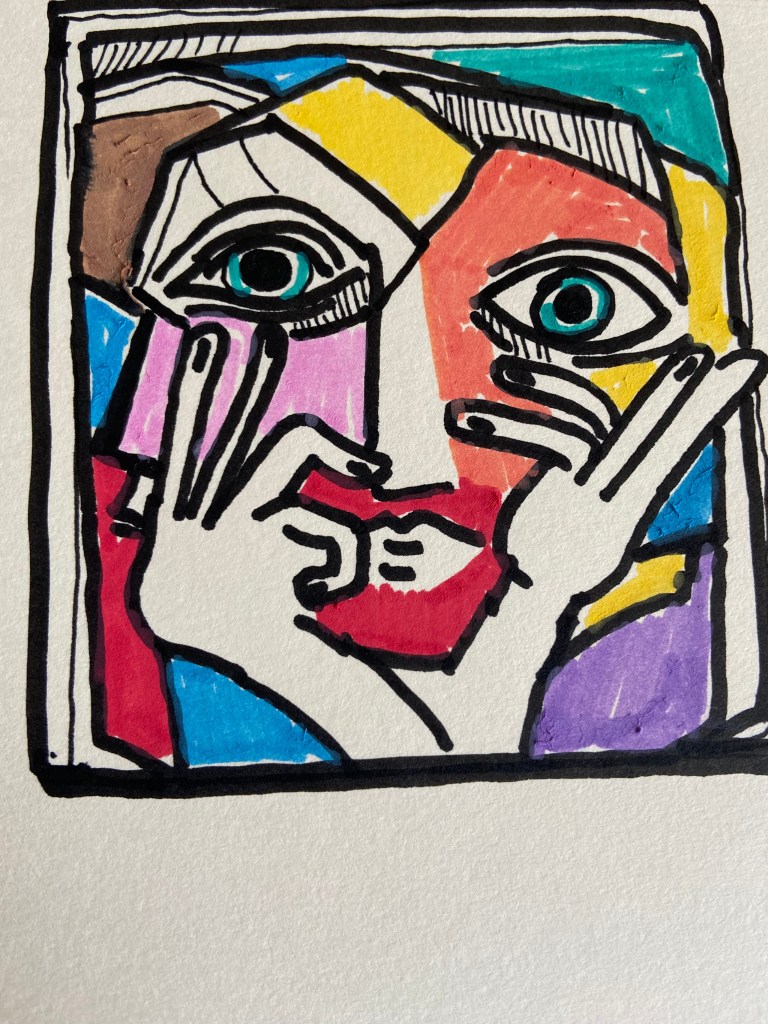
Credits: N. Vijay Mohan

 Sabr: A care collaborative
Leave a comment