
It was mid-2015, when I was pursuing my Masters at the University of Hyderabad, when a phone call changed my life forever. On the other side of the phone, my father informed me that my elder maternal uncle had had a stroke and was diagnosed with paralysis. This made him permanently bedridden! On my next visit to him, I found ayahs (for day and night shifts) had been hired to attend to his daily needs. From then till his last breath, the ayahs became an integral part of his life and the household. Observation from such close-proximity of ayahs, shadowing their tasks, and frequent interactions with them, stoked me to dive deeper into their work, their motivation and their universe!
A brief history of ayahs
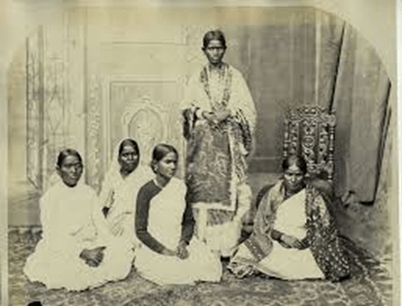
Hiring ayahs is not a new trend but predates the eighteenth-century European colonial era. Native women were recruited as nursemaids for children or ladies-maids for the women in the settler British households. The term ‘ayah‘ derives from the Portuguese word ‘aia’, which means mother, governess, or tutor. Early ayahs were of mixed race and a mobile workforce who traveled from the countryside to work in these settler European households, and also of wealthy natives. The colonial textual records represented ayahs as ‘dirty’, ‘inefficient’, and ‘corrupt’; aspersions that continue to follow them in the post-colonial modernity.
Ayahs in modern India
Fast forward to the contemporary era, ayahs are hired within the institutional settings of hospitals, nursing homes, and for home care for elder care and childcare. In my ethnographic research, some families cited limited resources as a reason for hiring ayahs instead of nurses. They are often compared with professionalized nurses and denigrated as ‘unskilled’ and ‘untrained’. Panchali Ray, an Associate Professor at Korea University, working on nursing and care in modern Bengal, found that such differentiation between nurses and nursing aides is rooted in the formalization of the nursing profession, especially to earmark it from the marginal caste-class nexus of nursing’s history. Nonetheless, stains and taint have not left the occupation. With professional training becoming the criterion of assigning rank, social status, and prestige, ayahs find themselves at the crossroads of disdain from the healthcare regime and families. Much in continuation of the colonial narratives, media report and web series like Gora, represent ayahs as vile and untrustworthy.
Elder care and ayahs
The projection for population aging and the low priority on the long-term care (LTC) of the elders in the resource-scarce regions in South Asia piques concern among gerontologists, demographers, and healthcare professionals. Eldercare in India is marred by a cluster of factors – poorly managed primary healthcare services, embryonic state of geriatric care, high medical costs, absence of universal health coverage, and exclusion of middle-income families from assistance in the NPOP (The National Policy on Older Persons in India). Reports like Formulating a Strategy for India’s Care Economy: Unlocking Opportunities and Senior Care Reforms in India treat this gap in senior care as a fertile ground for market intervention.
In the backdrop of the for-profit home-care market eyeing to expand its reach, inadvertently, ayahs are emerging as key stakeholders and resource persons for at-home older people. While their work overlaps and has continuities with domestic workers and cooks, ayahs are a unique category, also referred to as the care-domestic workers. Ayahs informed me that alleviating human suffering and promoting well-being, duty, close-contact body care, exigency, and reciprocity are foundations of ayah-care service. Interestingly, these characteristics of ayah care service deem ayahs as making more significant contribution and securing dignity against the gamut of ‘low-prestige’ and dehumanizing labour performed within the informal sector.
In September 2023, at an invited talk for ‘The Ayah and Amah International Research Network’, I presented the following argument. Ayahs are hired for elders in need of ambulatory assistance, disability care, assistance with daily living (ADL) for those bedridden, end-of-life care and companionship. Old-age care is marked by highly-intimate tasks, supervision and becoming an embodied extension of older people through walking support, assistance with hoisting and helping with the daily activities of living. Despite the marketized relations that mediate this care provision, ayahs transcend human lives at vulnerable junctures, and at the cusp of life and death. For geographically dispersed families, the co-presence of the ayahs provides the essence of family, mitigating isolation and the stigma of ‘aging alone’.
Post-script
The role, presence, and portfolio of ayahs in urban India will become more significant due to a number of coalescing factors like longer life expectancy, prolonging life with medicine and technology, and morbidity which poses complex needs. Further, traditional family caregiver roles are changing, and younger members migrate for work.
Ayahs need recognition and dignity through policy formulations that affirm their rights against arbitrary dismissal and assault, provision of hygiene supplies and protective gear during work, maternity leave benefits, and health insurance.
Contributed by Sayendri Panchadhyayi

 Sabr: A care collaborative
Leave a comment